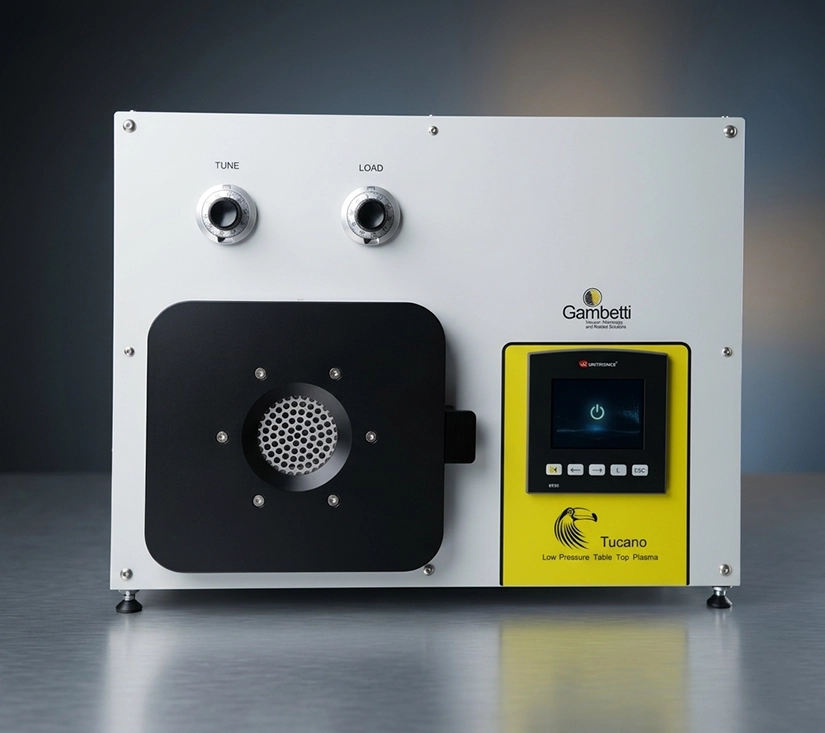
Plasma Reactor: A Closer Look
The plasma reactor is an advanced technology with applications across various sectors, from scientific research to industry. This type of reactor uses plasma—a state of matter in which gases are ionized—to generate chemical and physical reactions at low temperatures. The versatility of plasma and its distinctive properties enable it to perform a variety of functions, such as surface modification, material synthesis, decontamination, and sterilization.
Come funziona?
A plasma reactor creates an electric field that ionizes the gas, thereby producing charged particles. These particles interact with the surfaces of materials, facilitating various types of chemical reactions. This process is particularly useful, for example, for the deposition of thin films—a key operation in sectors such as electronics, nanotechnology, and photonics—or for surface cleaning and treatment. The ability to precisely control the plasma makes plasma reactors ideal tools for targeted applications that require high performance and consistent product quality.
Plasma reactors also are used in biomedical fields. For example, they can be used for sterilization of surgical instruments, as they can eliminate bacteria and other pathogens without the use of harsh chemicals. Their effectiveness in sterilization is due to the plasma’s ability to penetrate even crevices and porosity, reaching areas that other traditional methods may not be able to treat. In addition, because the treatment takes place at low temperatures, there is no risk of damaging sensitive materials.
Again, plasma reactors are known for their ability to operate at low pressures, which also makes them particularly effective inetching materials. Thanks to their advanced technology, they are able to guarantee optimal results in terms of uniformity and adhesion, crucial aspects in industries such as consumer electronics and optical component manufacturing.
In addition to Tucano, there are several plasma reactor solutions, including Colibrì and Falcon RIE. With advanced features, these reactors are designed to meet the needs of various industrial applications. All plasma reactors are equipped with advanced control systems that allow for real-time monitoring and adjustment of process parameters. This feature improves operational efficiency, enabling high-quality results, optimizing processing times, and reducing production costs. Ease of use and simplified maintenance make these solutions ideal for a wide range of applications, spanning from the aerospace sector to academic research.
So what can we expect from plasma reactors in the future? Their adoption in the industrial sector represents a step forward in technological innovation, allowing companies to remain competitive in an ever-evolving market. With increased research in the field of nuclear fusion, plasma reactors could also play a key role in the development of new sources of clean, sustainable energy.
In conclusion, plasma reactors are a versatile and constantly evolving technology with a wide range of applications. The plasma reactor solutions offered by Gambetti Kenologia are examples of how plasma technology can be used to meet modern needs, helping to improve efficiency and sustainability across various sectors.